Greenbottle Blue Tarantula

Greenbottle Blue Tarantula

Chromatopelma cyaneopubescens
$48
Price
females can live from anywhere up to 12 to 14 years, 12-15 years (females), 4-5 years (males)
Lifespan
Beginner to Intermediate - it is not overly defensive and since it is also hardy and easy to care for it makes an excellent beginner species for those who prefer a hands-off terrarium pet
Difficulty
Check availability & prices
In stock at 2 verified breeders

About this species

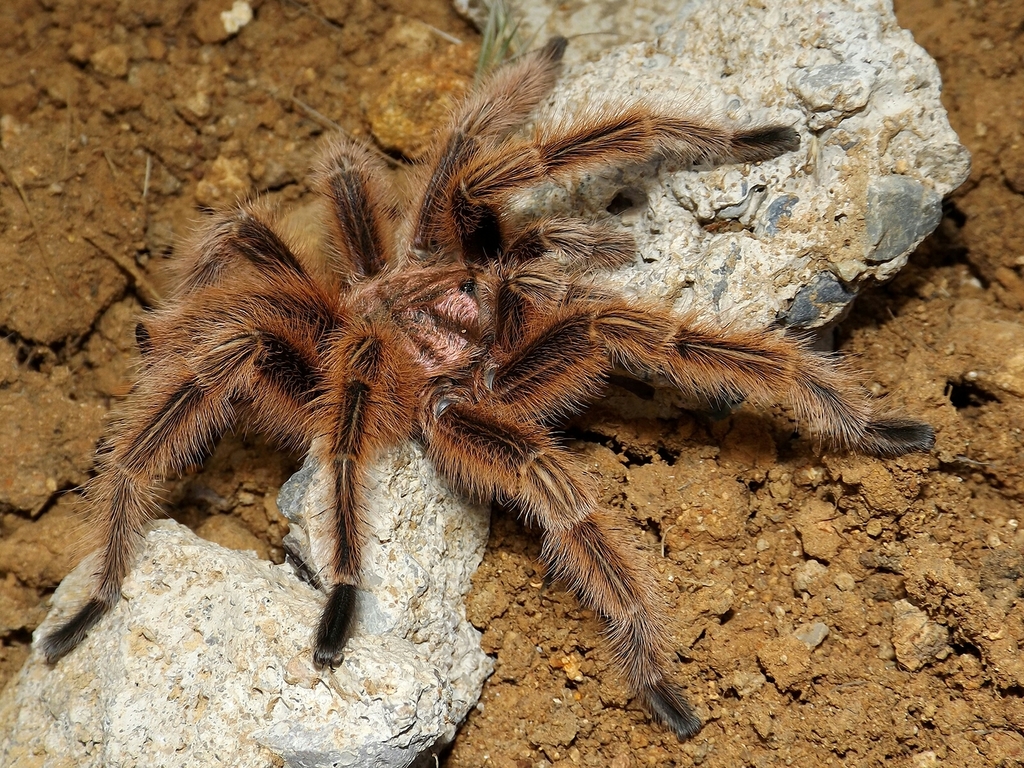
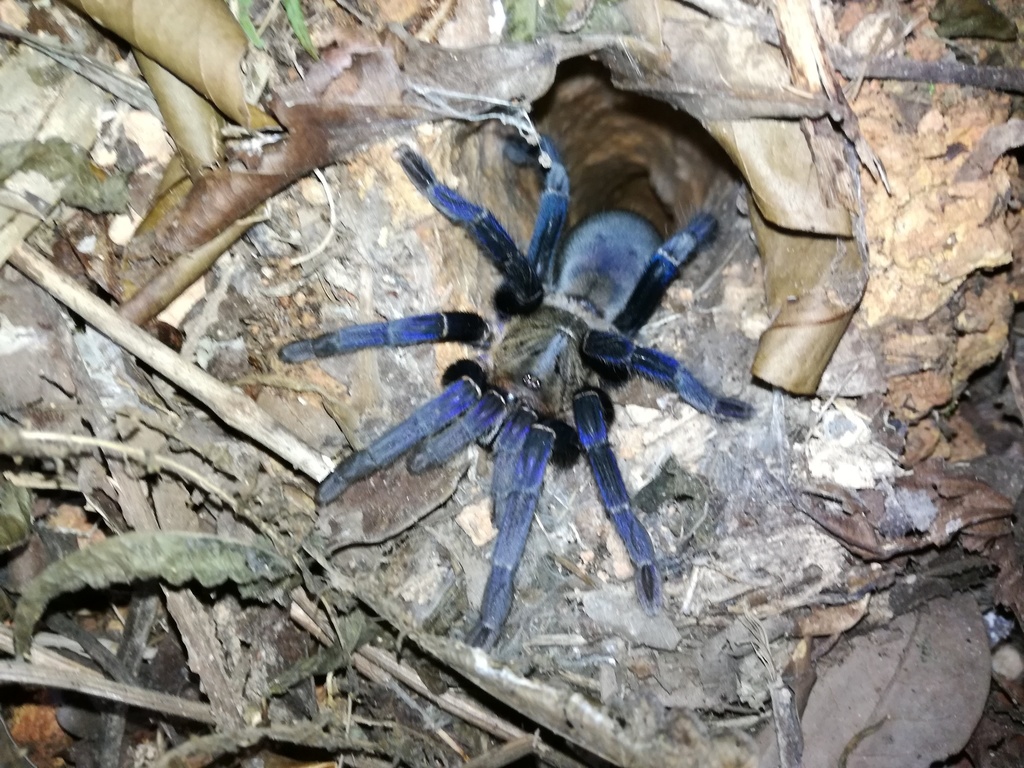
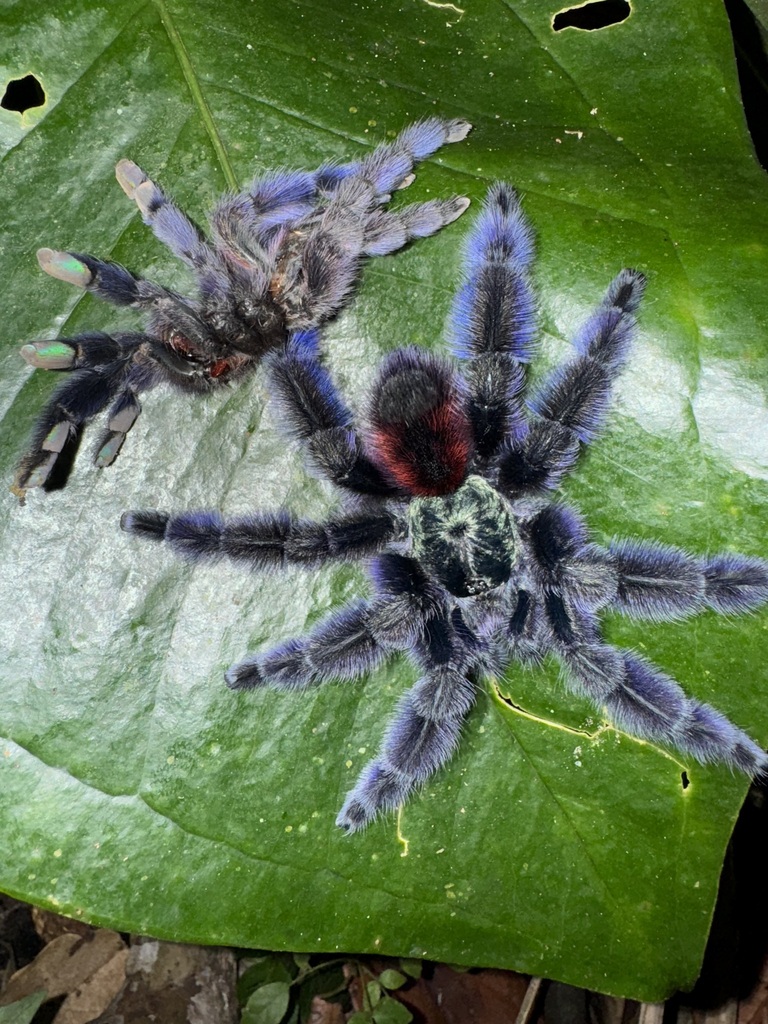
The Greenbottle Blue Tarantula is one of the most visually stunning tarantulas in the hobby, sporting metallic blue legs, a shimmering green carapace, and a vibrant orange abdomen. Their electric blue legs, metallic green carapace, and fiery orange abdomen look almost unreal, making them one of the most visually stunning tarantulas in the hobby. Native to the arid Paraguaná Peninsula in northern Venezuela, these medium-sized tarantulas are famous for being prolific webbers who create elaborate silk tunnels throughout their enclosures. Unlike some species that spend their days buried underground or hiding behind cork bark, GBBs are out in the open, decorating their enclosures with some of the most elaborate webbing you'll ever see.

What makes the GBB particularly appealing to keepers is their active, visible nature combined with their hardiness and relatively docile temperament. They're hardy, adaptable, and easy to care for, making them perfect for both beginners and experienced keepers alike. Unlike many tarantula species that hide constantly, GBBs stay out on display, always webbing and moving about their enclosure. They're fast and can be skittish, but they rarely show defensive behavior unless seriously provoked. They're not defensive, rarely kicking hairs or throwing threat postures unless seriously provoked.
Care requirements

Temperature
70-78 to 75-85°F
Humidity
30-50 to 50-60%
Enclosure
simple terrestrial cage with plenty of ventilation, a horizontal enclosure with moderate height
Size
12x12x12 inch (30x30x30 cm) enclosure works well for adult specimens, Floor space should be three to five times the tarantula's leg span
Substrate
dry substrate (commercial organic cactus soil mixes are excellent but dry coconut coir or 50/50 sphagnum peat moss/vermiculite mix are just as good), 1-3 inches of dry coco fiber, peat moss, or topsoil
Diet
gut-loaded crickets, roaches, or small insects. Adults should be fed once every 7-10 days, while juveniles can be fed every 5-7 days. Prey should be roughly the size of the tarantula's abdomen.
Water
A small shallow water dish should be provided at all times. Avoid misting the enclosure; a shallow water dish should provide enough humidity.
Important notes
The key is keeping it dry as it is sensitive to any dampness whether cage moisture, air humidity, or poor ventilation. extra care should be used when raising spiderlings as small containers typically used, such as vials or small jars with lids with small air holes, are too poorly ventilated. This species is fast and skittish - Green Bottle Blue Tarantulas are generally skittish and fast-moving

Did you know?

Slings have completely different colors - they're born with black and tan striped legs and golden carapaces that eventually turn pink, then blue-green
At first molting quickly and then slower with age - they're known as one of the faster-growing tarantula species
Chromatopelma is a monotypic genus, meaning C. cyaneopubescens is the only member of its genus

Common questions

Are GBBs good for beginners?
For beginners, it's easy to care for - no need for excessive humidity, no complex environmental demands, just straightforward husbandry with rewarding results. However, they are fast and can bolt unexpectedly, so handle with care.
Why is my GBB webbing so much?
Heavy webbing is completely normal! juvenile and larger specimens are some of the most talented (and excessive) webbers of my collection. They will put webbing everywhere they can reach it's awesome!
How often should I mist the enclosure?
You shouldn't mist at all! The most important golden rule for Greenbottle Blue care, however, is giving them a nice dry habitat. A GBB kept in overly wet conditions is unlikely to thrive.
Can I handle my GBB?
It's a bit fast and nervous to be considered "docile" and A keeper used to slower, calmer species may not be ready for a spider that may be out of its cage in the time it takes them to blink. Best kept as a display pet.

Related species