Goliath Birdeater

Goliath Birdeater

Theraphosa blondi
$100-300
Price
Females: 15-25 years; Males: 3-6 years
Lifespan
Advanced
Difficulty
Check availability & prices
View suppliers & Amazon options

About this species

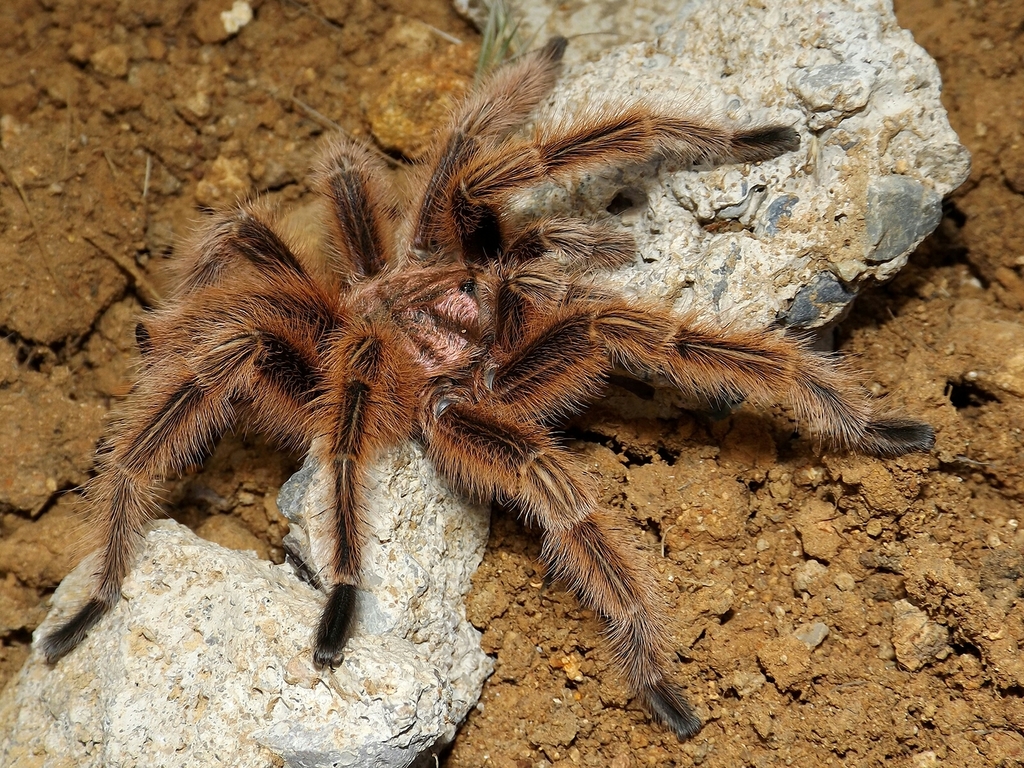
The Goliath Birdeater is truly a giant among spiders, holding the title as the world's largest tarantula by mass. Native to the rainforests of northern South America, this impressive arachnid can reach a leg span of up to 11-12 inches and weigh over 6 ounces—about the weight of a small puppy. Despite its intimidating name, the Goliath rarely eats birds in the wild, preferring large insects, earthworms, and the occasional small vertebrate. Their bodies are covered in light brown to golden hairs, and they're famous for their dramatic defensive display—rearing up, hissing audibly by rubbing their legs together, and releasing clouds of irritating urticating hairs when threatened.

For tarantula enthusiasts, the Goliath Birdeater represents the ultimate display animal. These nocturnal giants spend most of their time in deep burrows they excavate in the humid rainforest floor, emerging at night to ambush prey. They detect vibrations through sensitive hairs on their legs rather than relying on their poor eyesight. While their massive fangs and defensive nature demand respect, they're surprisingly docile in captivity when their needs are met.

People buy Goliath Birdeaters for their sheer impressiveness—there's nothing quite like watching a spider the size of a dinner plate in your living room. They're conversation starters, educational ambassadors, and for experienced keepers, relatively straightforward to maintain despite their size. However, they're definitely not a beginner species due to their potent urticating hairs (the worst in the hobby), large fangs, high humidity requirements, and defensive temperament.
Care requirements

Temperature
75-82°F
Humidity
75-90%
Enclosure
Large terrestrial setup with deep substrate for burrowing and excellent cross-ventilation to prevent mold
Size
Minimum 18" x 18" x 12" for adults; 45cm x 30cm is better for display
Substrate
5-8 inches of moisture-retaining mix: coco fiber, peat moss, or topsoil; some keepers add sphagnum moss
Diet
Juveniles: 1-2 large crickets weekly or equivalent roaches. Adults: 3-6 large crickets or 2-3 adult roaches weekly, adjusting based on abdomen size. Occasional pinkie mouse or gecko every 6-8 weeks for variety (not required). Spiderlings start on 1/2 inch crickets
Water
Large, shallow water dish always available; overflow weekly to moisten substrate. Mist one side of enclosure 1-2 times per week
Important notes
Has the most irritating urticating hairs of any tarantula—causes severe skin and respiratory irritation. Never handle. Good airflow is critical to prevent mold in high humidity. Wait 5-10 days after molting before feeding. Keep substrate damp but not swampy. May refuse food for weeks before molting

Did you know?

Can 'hiss' audibly by rubbing specialized hairs on its legs together—one of the few tarantulas that can make sounds you can hear across a room
Despite the name, it rarely eats birds—the name comes from an 18th-century engraving by Maria Sibylla Merian showing a tarantula eating a hummingbird
Holds the Guinness World Record as the largest spider by mass, with the record holder weighing 170 grams and spanning 28cm found in 1965

Common questions

Are Goliath Birdeaters dangerous?
While not deadly, they have large fangs (up to 1.5 inches) that can cause a painful bite comparable to a wasp sting. Their urticating hairs are the real concern—they're extremely irritating to skin and airways. Always use tongs and wear gloves during maintenance.
How fast do they grow?
With proper care, they can reach 4 inches in their first year. Males mature in 2-3 years, females in 3-4 years. They're medium-fast growers compared to other tarantulas.
Do they really need to eat mice?
No, mice are optional treats. A diet of appropriately-sized crickets and roaches provides complete nutrition. Some keepers never feed vertebrates at all.
Why is mine always hiding?
This is normal behavior—they're nocturnal burrowers. Most activity happens at night. A Goliath at its burrow entrance is hunting; one deep inside is resting. They become more visible as they get comfortable in their enclosure.

Related species