Chinese Mantis

Chinese Mantis

Tenodera sinensis
$13.99
Price
8-12 months total, with females living longer
Lifespan
Beginner
Difficulty
Check availability & prices
In stock at 2 verified breeders

About this species

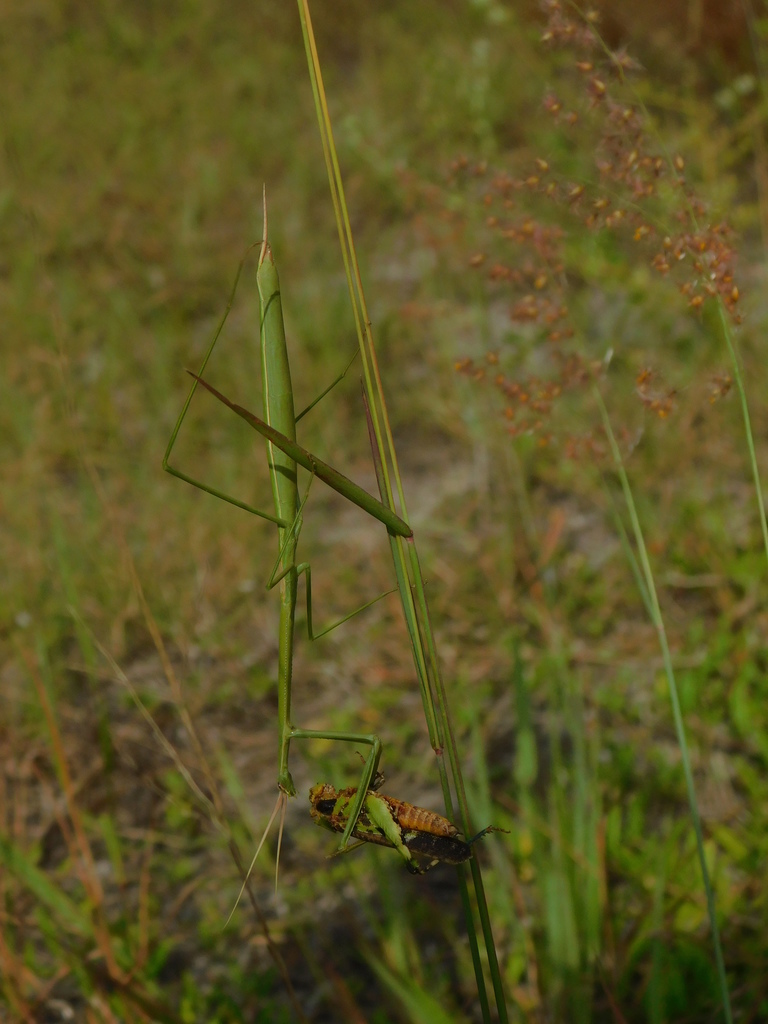
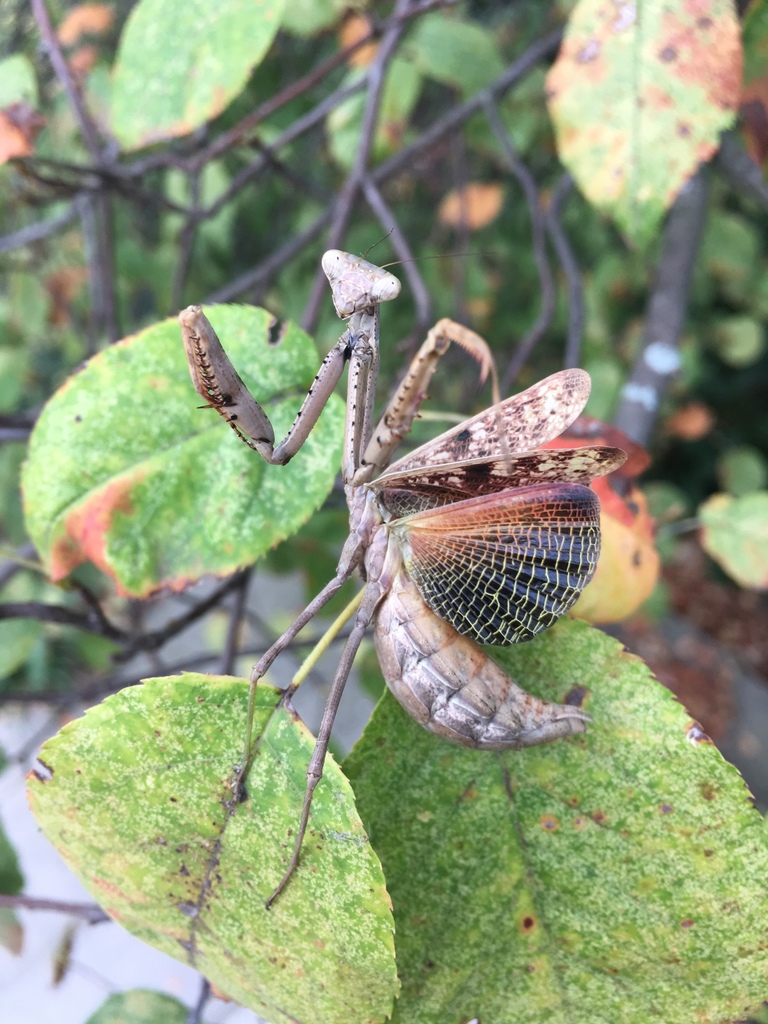
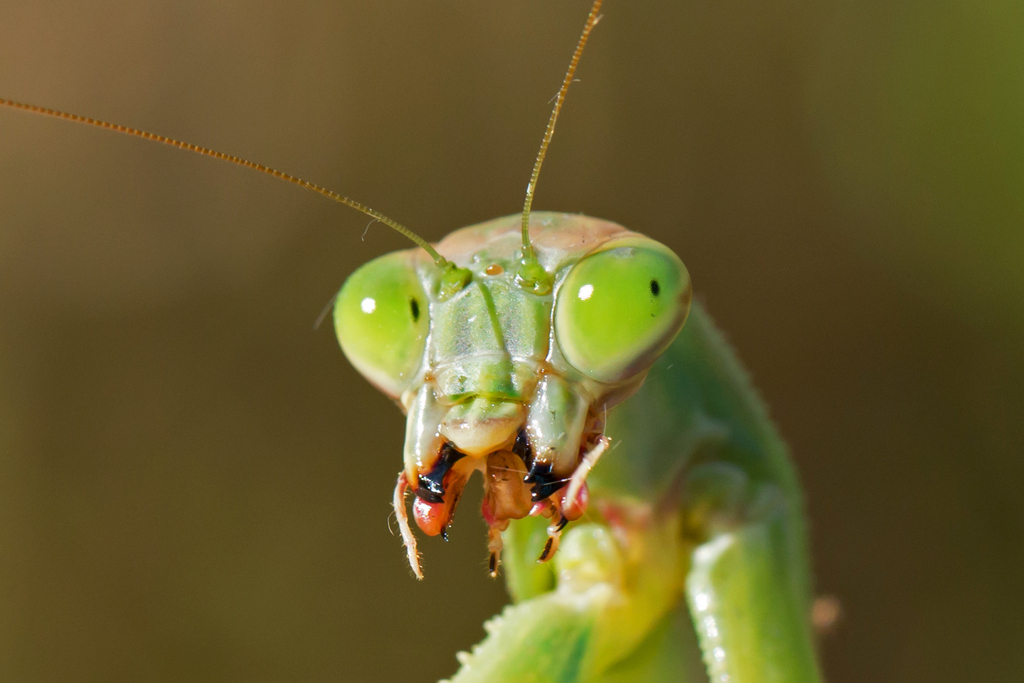
The Chinese Mantis is one of the largest praying mantises available in the pet trade, reaching up to 4-5 inches as adults. Native to Asia, this impressive predator was accidentally introduced to the United States in 1896 near Philadelphia and has since become naturalized across North America. Their coloring varies from bright green to brown, with brown individuals displaying a distinctive green stripe along the wing edges. With their triangular heads that can swivel 180 degrees and powerful raptorial forelegs, Chinese mantises are fascinating to watch as they hunt.

This species has gained popularity among both gardeners and pet keepers. Gardeners appreciate them for natural pest control, while hobbyists love their impressive size, relatively easy care requirements, and ability to become quite tame with handling. They're known for quickly adapting to human presence and can even be hand-fed once comfortable.

Chinese mantises are voracious hunters that will tackle prey items nearly their own size. In the wild, they've been observed catching everything from large insects to small vertebrates, including hummingbirds. Their aggressive feeding response and active hunting behavior make them entertaining pets for those who enjoy observing predatory behavior.

Care requirements

Temperature
70-85°F
Humidity
50-65%
Enclosure
Well-ventilated terrarium or mesh cage with material on ceiling for hanging
Size
Minimum 8"L x 8"W x 12"H for adults; 3x mantis length in height, 2x in width
Substrate
Paper towels, coconut fiber, or sphagnum moss
Diet
L1-L3 nymphs: D. hydei fruit flies; L4-L5: house flies or blue bottles; L6-adult: blue bottle flies, crickets, roaches, moths. Feed every 2-3 days for nymphs, every 3-4 days for older nymphs, adults twice weekly
Water
Mist enclosure once daily (twice for mesh cages). Use only distilled, RO, or spring water - never tap water
Important notes
Highly cannibalistic - must be housed individually after L2/L3. Stop eating 1-2 days before molting. Ensure empty space at top equals 2x mantis size for molting. Can be prone to mismolts if humidity is incorrect

Did you know?

Chinese mantises can rotate their heads 180 degrees and have stereoscopic vision for accurately judging distance to prey
Females may engage in sexual cannibalism in up to 50% of matings, providing nutrition for their offspring
Two martial arts styles - Northern Praying Mantis kung-fu and Southern Praying Mantis - were created to mimic this species' movements

Common questions

Can Chinese mantises be kept together?
No, Chinese mantises are highly cannibalistic and must be housed individually after the second or third molt (L2-L3). Even well-fed mantises may attack cage mates.
What size prey should I feed my Chinese mantis?
Feed prey items no larger than 1/3 to 1/2 the mantis's body length. Adults can handle larger prey like adult crickets, but avoid prey that can bite or sting.
Why did my mantis stop eating?
Mantises typically stop eating 1-2 days before molting and won't resume until after the molt is complete. This is normal behavior and not a cause for concern.
Can I use tap water for misting?
No, never use tap water as it may contain chemicals harmful to mantises. Use only distilled, reverse osmosis (RO), or spring water for misting.